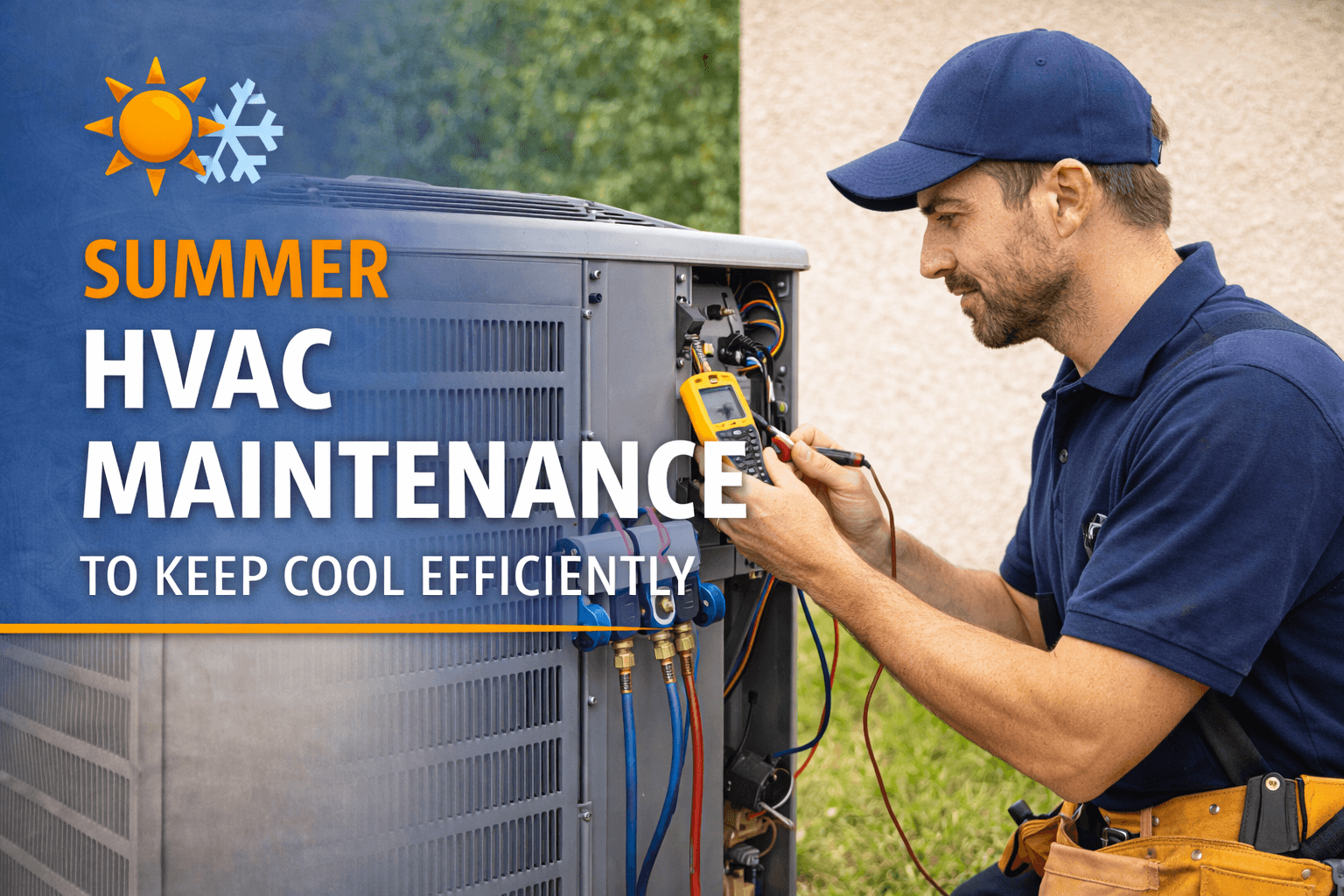
Summer HVAC Maintenance to Keep Cool Efficiently
Prepare your HVAC system for summer heat with simple maintenance steps that improve efficiency, lower energy costs, and keep your home comfortable all season long.
As temperatures climb, your HVAC system becomes one of the most important systems in your home. Proper summer HVAC maintenance not only keeps your living space comfortable but also reduces energy costs, prevents breakdowns, and extends the life of your system. With a few proactive steps, homeowners can stay cool while avoiding expensive repairs during peak heat.
This guide covers the essential HVAC maintenance tasks every homeowner should complete before and during the summer season.
Why Summer HVAC Maintenance Matters
During summer, your air conditioning system runs longer and works harder than any other time of year. Without proper maintenance, this increased workload can lead to:
Higher energy bills
Reduced cooling performance
Unexpected breakdowns
Shortened system lifespan
Poor indoor air quality
Regular upkeep improves efficiency, protects your investment, and ensures your home stays comfortable even during extreme heat.
1. Replace or Clean HVAC Filters
Dirty air filters are one of the most common causes of poor HVAC performance.
Recommended schedule:
Every 30–60 days during heavy summer use
More frequently if you have pets or allergies
Clean filters:
Improve airflow
Reduce strain on your system
Lower energy consumption
Improve indoor air quality
This simple step alone can significantly boost efficiency.
2. Inspect and Clean Air Vents
Blocked or dirty vents prevent cool air from circulating properly.
What to do:
Remove dust and debris from vents
Ensure furniture isn’t blocking airflow
Check for uneven cooling in rooms
Balanced airflow helps your HVAC system run more efficiently and keeps temperatures consistent throughout your home.
3. Check Your Thermostat Settings
Your thermostat controls system workload and energy usage.
Best practices:
Set temperatures between 74–78°F when home
Raise temperatures slightly when away
Consider installing a programmable or smart thermostat
Smart thermostats optimize cooling schedules and can reduce energy costs over time.
4. Clear Debris Around the Outdoor Unit
Your outdoor condenser unit needs proper airflow to function effectively.
Maintenance tips:
Remove leaves, grass, and debris
Keep at least 2 feet of clearance around the unit
Gently rinse coils with a hose
This improves efficiency and prevents overheating.
5. Schedule a Professional HVAC Tune-Up
Annual professional maintenance is critical before peak summer heat arrives.
A technician will:
Inspect electrical components
Check refrigerant levels
Clean internal parts
Test system performance
Identify early signs of failure
Preventative service is far less expensive than emergency repairs.
6. Seal Air Leaks and Improve Insulation
Cool air escaping from your home forces your HVAC system to work harder.
Want this maintenance done for you?
Brickwise builds personalized schedules from your home inspection report — free for 14 days.
Check for leaks around:
Windows and doors
Attics and crawl spaces
Ductwork connections
Sealing leaks improves comfort, lowers energy bills, and boosts system efficiency.
7. Monitor Energy Bills for Warning Signs
A sudden increase in utility costs may indicate HVAC inefficiency.
Watch for:
Higher monthly bills
Reduced cooling performance
Longer cooling cycles
Strange noises or odors
These are early indicators that maintenance or repairs are needed.
8. Keep Drain Lines Clean
Your HVAC system removes humidity as it cools your home. Condensate drain lines can clog over time.
Prevent issues by:
Flushing lines with vinegar
Checking for standing water
Watching for musty smells
Clean drainage prevents water damage and mold growth.
9. Upgrade When Necessary
If your HVAC system is 10–15 years old, efficiency drops significantly.
Signs it may be time to upgrade:
Frequent repairs
Rising energy costs
Inconsistent cooling
Outdated SEER rating
Newer systems offer improved efficiency and lower operating costs.
10. Create a Summer HVAC Maintenance Routine
Consistency is key.
Monthly checklist:
Replace filters
Inspect vents
Check outdoor unit
Monitor performance
Seasonal checklist:
Professional inspection
Drain cleaning
Insulation and leak checks
Regular routines prevent costly surprises.
Energy Efficiency Benefits of HVAC Maintenance
Maintaining your HVAC system doesn’t just improve comfort — it delivers real financial and environmental benefits:
Lower monthly energy bills
Reduced carbon footprint
Longer system lifespan
Fewer emergency repairs
Increased home value
Energy-efficient homes are more attractive to buyers and easier to maintain long-term.
Final Thoughts: Stay Cool Without Overspending
Summer HVAC maintenance is one of the most important steps homeowners can take to protect their comfort and finances. A well-maintained system runs more efficiently, lasts longer, and keeps your home consistently cool even during extreme heat.
By replacing filters, clearing vents, sealing air leaks, and scheduling professional inspections, you’ll reduce energy costs and avoid breakdowns during the hottest months of the year.
Taking action now ensures your home stays comfortable, efficient, and prepared for whatever summer brings.
Turn this checklist into a personalized maintenance plan
Brickwise turns your home inspection report into a custom maintenance schedule with due dates, cost estimates, and DIY-vs-pro recommendations. Free for 14 days, no credit card required.