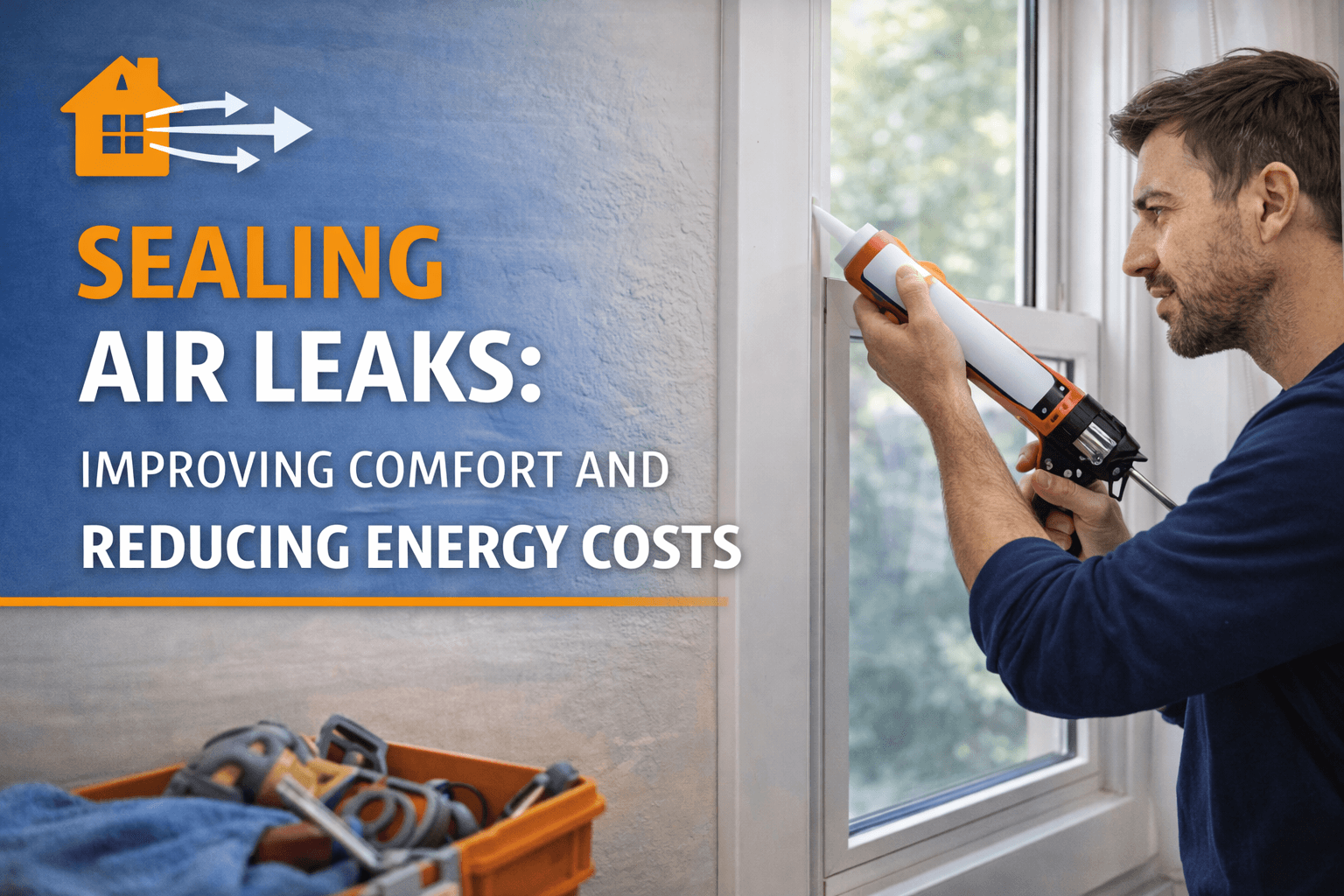
Sealing Air Leaks: Improving Comfort and Reducing Energy Costs
Don’t let energy slip through the cracks. Learn how sealing air leaks can boost comfort, lower utility bills, and make your home more efficient year-round.
Drafty rooms, high utility bills, and uneven temperatures are signs your home might be leaking more than just air—it’s leaking money. Unsealed air leaks are among the top culprits for energy loss in homes, yet they're often overlooked. The good news? With a little time and effort, sealing these leaks can greatly improve your comfort and reduce your energy costs year-round.
Let’s explore where leaks are hiding, how to find them, and how to fix them fast.
Why Air Leaks Matter
Air leaks allow unconditioned air to sneak in and out of your home. This means:
Hot air escapes in winter, cool air escapes in summer
HVAC systems work harder, costing you more
Drafts make it harder to maintain consistent temperatures
Dust, pollen, and allergens can enter more easily
According to the U.S. Department of Energy, sealing air leaks and adding insulation can save up to 20% on heating and cooling costs.
Common Sources of Air Leaks
Air leaks can hide in plain sight. The most common problem areas include:
Windows and doors (especially around the frames)
Baseboards and crown molding
Electrical outlets and switch plates
Attic hatches and pull-down stairs
Recessed lighting fixtures
Plumbing penetrations and vent pipes
Fireplaces and flues
Around HVAC registers and ducts
How to Detect Air Leaks
Before sealing, identify where air is escaping. Here’s how:
🔎 Visual Inspection
Look for visible cracks, gaps, or holes in window frames, door jambs, and exterior walls.
💨 Smoke or Incense Test
Want this maintenance done for you?
Brickwise builds personalized schedules from your home inspection report — free for 14 days.
Turn off HVAC systems, close all windows and doors, and hold a lit incense stick near suspected leak points. If the smoke wavers, there's air movement.
🕯️ Candle Method
Hold a lit candle near windows or outlets and watch the flame flicker—another sign of airflow.
📦 Professional Energy Audit
Consider hiring a professional to perform a blower door test, which depressurizes your home and pinpoints air leaks with high precision.
How to Seal Air Leaks
1. Weatherstrip Windows and Doors
Apply adhesive weatherstripping to door frames.
Use door sweeps to seal gaps beneath exterior doors.
Install vinyl or foam tape around windows for a tighter seal.
2. Use Caulk for Small Gaps
Seal cracks under ¼ inch wide with latex or silicone caulk.
Great for areas around window trim, baseboards, and pipes.
3. Apply Expanding Foam for Larger Gaps
Use spray foam for holes around plumbing or vents that are larger than ¼ inch.
Be careful not to over-apply—foam expands significantly.
4. Install Foam Gaskets Behind Outlet Covers
Place inexpensive foam sealers behind light switches and outlets, especially on exterior walls.
5. Seal Attic and Basement Leaks
Use caulk and foam to seal around the attic hatch, recessed lights, and plumbing vents.
Insulate basement rim joists with rigid foam board and spray foam.
Bonus: Insulation Makes a Big Difference
Once leaks are sealed, adding or upgrading insulation boosts your home's energy efficiency even more—especially in the attic and crawl space.
Benefits of Sealing Air Leaks
✅ Lower Energy Bills
Reduce your heating and cooling costs significantly year-round.
✅ Increased Comfort
Enjoy more consistent temperatures and fewer drafts.
✅ Improved Air Quality
Keep dust, allergens, and pollutants from sneaking into your home.
✅ Longer HVAC Life
Reduce strain on your system, extending its lifespan and lowering maintenance needs.
Final Thoughts
Sealing air leaks is one of the most affordable and effective ways to improve your home’s comfort and energy efficiency. Whether you DIY or call in a pro, taking the time to inspect and seal problem areas can save money—and make your living space more enjoyable every season.
Turn this checklist into a personalized maintenance plan
Brickwise turns your home inspection report into a custom maintenance schedule with due dates, cost estimates, and DIY-vs-pro recommendations. Free for 14 days, no credit card required.